


Every new collection is born from a symbol. And this time, it was Penelope who pulled the first thread.
She is the first archetype chosen to open the new cycle of Godde. From each study, an entire universe is born, and Penelope, the queen of Ithaca, became the inspiration for this month.
The silence as a form of resistance

Penelope chose, and thus constructed time, space, and destiny with her own hands. She became a symbol of what it means to govern oneself, with art, lucidity, and constancy.
Therefore, the study of the month at Godde is AUTONOMY.
Each theme is transformed into works that, like life, are made of symbols, colors, lessons, and everyday gestures.
This is how collections are born: from an ideal that’s inspire, from an inspiration that becomes art, and this art returns to the world in the form of a print, postcard, original work, gesture and time, always in beauty.
In Penelope, remembered here as the archetype of autonomy, takes shape: time created by one's own hands and which transforms the everyday into art.
In the coming weeks, we will dive into this universe, and perhaps you will discover that what they called waiting was actually just the beginning of all creation.

THE MYTH
All the stories told here are divided into 4 main pillars, so we can understand our inspirations, the archetypes and their stories, what made them so memorable and great, how to transform our surroundings with their beauty, and how to bring these reflections closer to us.

01
The Archetype and the history
02
The Gesture
here we will discover how the character became our inspiration
what is its gesture, habit, main action and what can we learn from its symbolism

03
The World - Space
here history, art, beauty and much more create a space where our character lives, where it goes, what it does, what it likes; it's here that brings the myth closer to our lives, how we can bring it into our days, our homes, closer to our reality
04
The Time - Today
finally, here we see how to learn from this myth, how simple attitudes can transform our daily lives with art and beauty, how to make something new good and relevant to our day-to-day lives, how to bring the myth to life within ourselves


ARCHETYPE AND HISTORY
This is not a story about waiting. It's about choice.
So, what would an autonomous person be like, after all?
I found Penelope, yes, the wife of Odysseus. In myths, there is never a figure that is merely there to fill space, and to reduce Penelope to a " faithful wife " would be to grossly underestimate a Queen.
The myth tells that Odysseus, shortly after marrying Penelope and moving to Ithaca, witnessed only the birth of his son before being summoned to the Trojan War. Ten years of fighting followed, plus another ten years just for the return journey. Storms, hostile gods, monsters, winds, detours, challenges... And when he finally returned, he found his kingdom overrun by suitors for his wife and his throne threatened.
He had to reclaim everything, including his place. And... everyone knows that part.
But... what about Penelope?
Penelope is a daughter of Sparta, a symbolic daughter of Hera - strength and order in a human being.
She lived his own battle exactly from where she was
and because of it became a symbol of true autonomy,
built from inside, in silence.
And more...
For twenty years, she sustained, governed, prospered, and kept Ithaca alive. She created her own space within time. She became queen, government, stability, prosperity, courage, through art.
She resisted the suitors' advances with a gesture as subtle as strategic: she wove during the day and unraveled at night. Weaving was an act of her intelligence, cunning, and self-control.
To weave and unravel. To let go of what is no longer useful. To build what is necessary. And so, to continue tirelessly.
Penelope didn't wait, and she wasn't just faithful; those were merely the results of the roles she played. What she gave to Odysseus was a consequence of who she became: Penelope. And those are her virtues.
She is the thread that connects the entire story. Everything originates from her and everything returns to her. She is the axis.
The courage to build who you want to be, the determination to not stop, and the freedom to choose, day after day, to be true to what you believe in: that’s autonomy.
That 's what means to be center.


STUBBORN?
This is not a story about waiting. It's about choice.
To be whatever you want, to have your own opinions, to act according to what you believe is best...
All of this seems simple, but there's a fine line between wanting and have the power to.
No one is born ready, and this so-called "maturity" doesn't guarantee that one will ever be.
Freedom is a construct, and it only takes shape when built consciously.
It's not a fever that suddenly takes hold, nor a sudden outburst that justifies explosions or abrupt actions. Nor is it simply about that image of a strong personality who says whatever they want, at any cost.
Can you think of something that you completely control, with total mastery, and that, in addition to being good for you, also benefits everyone around you?
Maybe this is freedom: not just the absence of chains, but rather autonomy: a conscious and responsible action.
In a broader sense, freedom is the transition from a passive state to an active one. It's about ceasing to be driven by circumstances and beginning to decide deliberately.

The freedom to be whatever you choose.
Her most symbolic action in the story was weaving by day and unraveling at night. Penelope, as a presumed widow, couldn’t rule and needed a king.
She was pressured to choose one of the suitors who had taken up residence in the castle, living at the crown's expense, eating, drinking, and mocking her situation.
But Penelope was convinced that Odysseus was alive, that he would return and kill all the suitors.
It was with this certainty that she devised her plan: she would weave a funeral garment for her father-in-law, and, at the end of the work, she would announce her decision.
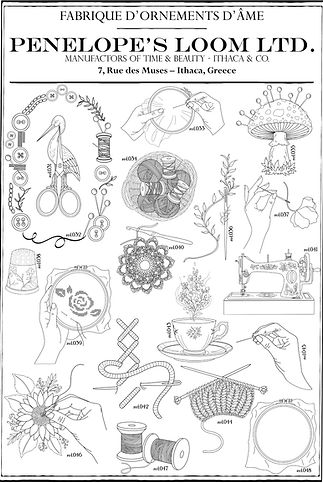
So, by day she wove and by night she unraveled.
And she spent years repeating this gesture, creating her own space within time.
She did what, theoretically, she couldn't. She maintained the kingdom, governed, and made her lands prosper. And all of this is more than resistance; it's an expression of autonomy: a deliberate, constant action, carried out
with lucidity and firmness.
Weaving is not a feminine gesture
but a gesture of power.
The woman who weaves her own
life, governs herself.
And to this Queen, the world bows
and unfolds.
GESTURES, SYMBOLS AND ACTIONS
PENELOPE'S WORLD
It's true that the space in which we choose to grow
influences us significantly. But a flower can also grow in a
small hole in the asphalt.
Creating an environment conducive to what we want and
believe in certainly reduces resistance and expands our potential for development. Even so, this space cannot always be controlled or chosen.
Ithaca is Odysseus' past, present, and future: origin, challenge, return. As a symbol, it represents a line of continuity, that which sustains who we are.
Growing up isn't always about doing what brings immediate pleasure. Sometimes, it's about beginning to appreciate what's right, even when it doesn't seem so appealing yet. Taste needs to be refined.
I heard something that fits perfectly here: our brains are designed for instant gratification, but we live in a world of long-term results.
That's why symbols exist. Symbols are our gateways to transformation.
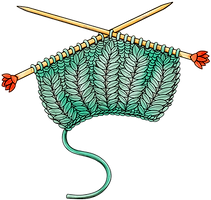
"Penelope's World" was entirely built from textile work: embroidery, spinning, weaving, knitting, crocheting. It was there that she shaped her own destiny. Between threads and patterns, between repetitions and transformations, she produced beauty in her living room, on the balcony with plants, in her daily work, in preparing food.
Growing up is this: developing beauty in the small things of everyday life.

 |  |  |
|---|---|---|
 |

HOME AS A CHOICE
I've moved around quite a bit in the last few years and I'm up for almost anything, but there's one thing I don't let pass: a safe home. Sometimes that home is the house I'm living in, but I haven't always had control over that. So I've chosen to build myself into my own safe home.
I don't think it's a finished work. I realized it's something that constantly transforms, falls apart, and rebuilds itself. It's a kind of unstable security. Like a roly-poly toy, remember? That doll that wobbles and wobbles but doesn't fall.
And it can't fall apart. This is what I've chosen to live every day. This is who I've decided to be. But it's not always easy or beautiful like this.
What have I learned to do in moments when everything is shaky? I surround myself with symbols that support me and remind me of the good I want to become.
In easy times, these symbols remind me of beauty and strengthen me. And on days when everything seems infinitely distant, they remind me why, even when tired, I still keep putting one foot in front of the other.

When I finished my painting studies, I still didn't feel ready to work with art, so I went back to my old safety net and accepted a job as an architect. I knew it wasn't where I wanted to be, nor what I wanted to do, but I understood that, for a while, was exactly where I needed to be to build something bigger.
I was hired, and as soon as I got home I embroidered a 3D beaded heart, held up by a mannequin hand. It reminded me: “It’s okay to take a step back, but remember your heart, there is where you must grow."
He worked with me and stayed so close to the mouse that I often bumped into it, as a constant reminder of what I was really building and where I was going.
SYMBOLS AND SCENARIOS

1. Scale of Values: Clarify and prioritize what constitutes an essential value
for you. Who do you want to be? And what are the things you absolutely cannot give up?
2. Conscious Definition: Whenever you need to make a decision, give yourself five seconds to think for yourself: does this make sense? Does it bring me closer to or further away from my values?
3. Consistent Action: From your unquestionable decisions comes practice: repeat and repeat. It's not enough to decide once; it's necessary to act consistently over time. They say habits are formed in 21 days, but even after years, a symbol, a situation, or an image can lead us back to old habits. Nothing is guaranteed. Therefore, it's necessary to always choose. Having a choice is freedom; acting consistently is autonomy.
4. Error and Adjustment: It's okay to make mistakes, to lose your balance, to not succeed. Look, acknowledge them, and choose your true path again. Knowing your own limitations is a form of power. Now that you see, now that you know, you have a chance to transform. Thus, you overcome internal pressure.
5. Resistance and External Pressure: You don't need to convince anyone of what you do, nor justify your choices. The biggest war is internal. Don't waste energy fighting outside as well. Save yourself. Thoughts, habits,
unconsciousness are already enemies enough. And remember: knowledge is power. Know thyself.

In our myth, Ithaca was not only a physical place of safety, but also a symbolic place of belonging and identity.
The contrast between the outside world, where Ulysses went, and the palace, where Penelope remained, reveals that the true place is where one feels the need to develop, and this doesn’t depend on the setting.
The true heroine doesn’t emerge ready for battle; she is built along the way.
I use a very simple plan to establish certain habits, and I'll tell you about it now:
PATTERNS
In a home dressed in green: the color of hope, of nature, of growth, and of the sacred. And which also reminds me of Pandora's box: hope is emptying oneself of ignorance to fill oneself with wisdom.
Red brings energy, strength, and determination. It's the color of weaving and unweaving, of building and transforming, of discarding what is no longer useful and nurturing what is. Every day. It also represents good fortune, celebration, and joy.
And finally, white: purity, peace, completeness, silence. The home, where everything should be built.


Do you have something what is non-negotiable?
Not being the author of a finished work, weaving, creating and building one's own story is the
bravest thing we can do for ourselves.
When you need to act now, with no time to think, when it's now or never, yes or no, the answer
is usually no. Because when you completely lose the possibility of reflecting and choosing, the
answer should always be no.
In Ithaca, time transformed Penelope into the guardian of domestic order, the continuity of the
kingdom, and collective identity.
Time transformed its role. The act of weaving and unravelling became a metaphor for time itself: she used weaving to shape her own, and the weave itself became a living image of it.
Time is like that: a process of weaving and unravelling, creating and undoing infinitely. And, contrary to distancing her from herself, time shaped Penelope and made her the center: the starting point and the point of return.
That's identity.
And autonomy reinforces this identity.
As proof end in the myth, Ulysses needed to prove his true self: not only to others, but to Penelope as well. He underwent a second subtle and intelligent test by Penelope and revealed a secret known and shared only by the two of them. Body and soul, reunited.
And so, he became worthy of the queen.
Similarly, we too must become worthy of the virtues we seek.
May the winds bring us good fortune!
the time is now!

